

As an Amazon Associate I earn from qualifying purchases.

Table of Contents
- Introduction
- What’s included in The Dead God’s Hand?
- What is the adventure like?
- What are the locations and lore like?
- What are the monsters and NPCs like?
- What is the treasure and equipment like?
- What is the art and design like?
- How much is The Dead God’s Hand?
- Is The Dead God’s Hand worth picking up?
- Final thoughts and review score

As the default setting for the Pathfinder tabletop RPG, the world of Golarion has a staggering amount of lore to draw on from over two decades of publication and hundreds of adventures, supplements and novels.
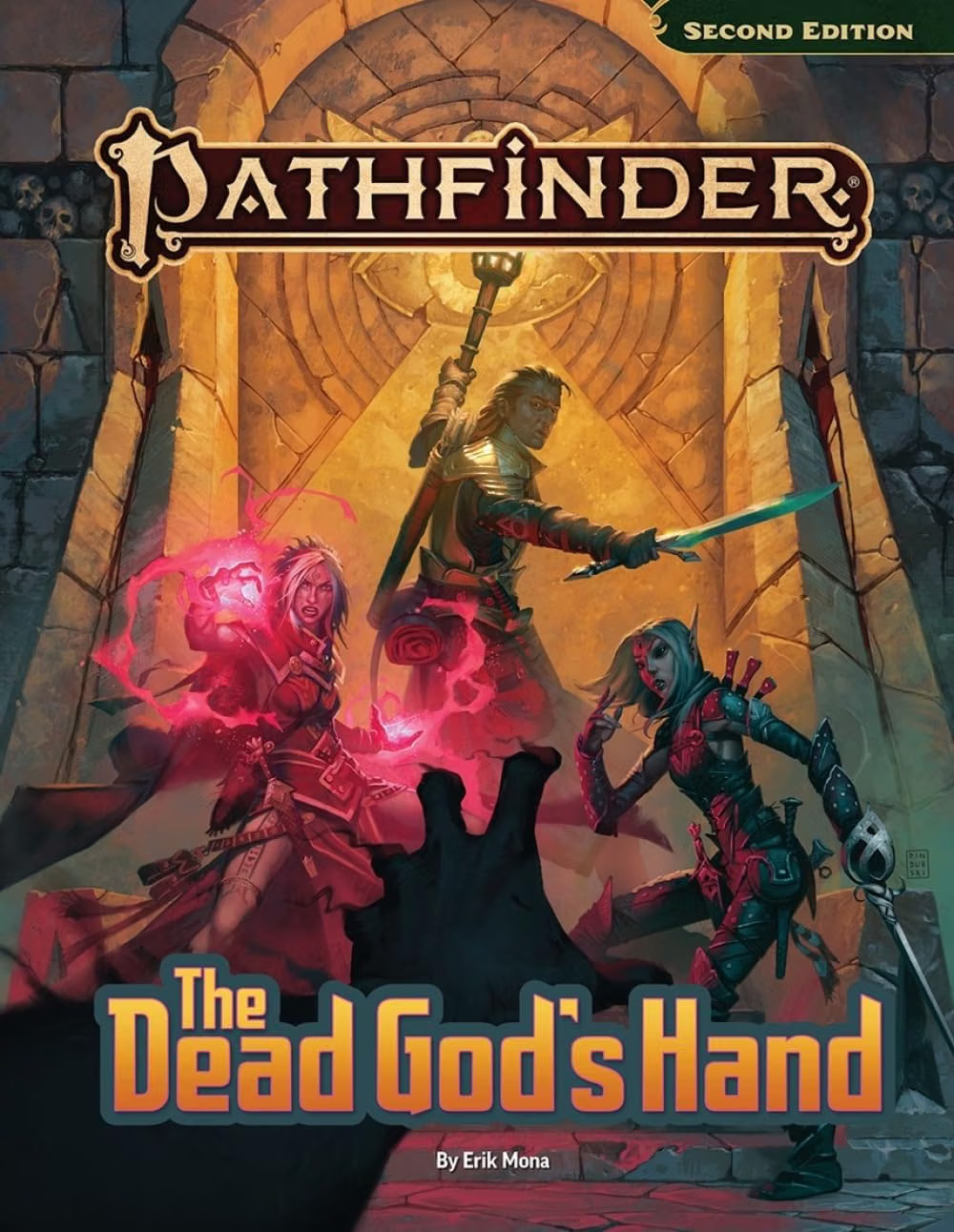
Yet a new PF2E adventure is a true blast from the past, digging up a rarely explored piece of Golarion’s ancient history and putting players front and center in a pivotal moment. Entitled The Dead God’s Hand, this new standalone adventure is also unusual in that it’s based on a legendary in-house campaign run for Paizo staff by and convention goers by current Publisher and Chief Creative Officer Erik Mona. It’s now available to the general public in PDF and hardcover from your local game store, Paizo, DriveThruRPG and Amazon.
So does this new Pathfinder 2E adventure deserve a hand or is it dead on arrival? Below, I venture into the depths of the Darklands to find out. (NOTE: I did not receive a review copy from Paizo, and instead purchased a copy of the book at my own expense.)
What’s included in the Dead God’s Hand?
The Dead God’s Hand is a 176-page Pathfinder 2E adventure written by Erik Mona that consists of the following content:
- The Adventure (130 pages): As expected, this makes up the majority of the book, spanning three chapters that guide characters from a Darklands prison break up to the mystical thresholds of an ancient test of divinity.
- Adventure Toolbox (37 pages): A GM support section that features 14 magic items, four new monster stat blocks, nine Adventuring Companion NPCs (with deep background and motivations for each) and six ready-to-use player handouts.
Notably, The Dead God’s Hand has its origin as a “competitive” Pathfinder campaign called Kings of Absalom that Erik Mona ran for members of the Paizo staff, convention attendees and a group of friends from 2010–2015. Mona envisioned it as a tournament-style campaign that measured the success of five-adventurer teams against one another, in an attempt to build a “mega-player mini-campaign” in which PCs might eventually switch from group to group, with the ultimate “winners” becoming powerful political players in the city of Absalom.

What is the adventure like?
*** SPOILERS AHEAD ***
The Dead God’s Hand is a complete adventure that takes characters from levels 1 to 6 and can likely be completed in about 20 to 30 hours. It’s broken out into three chapters:
- Chapter 1: Captives of Clan Orthux: The PCs wake up stripped of their gear and suffering from memory-robbing poison in the holding cells of a ruthless clan of gray dwarves (known as hryngar) deep in the cavernous underground realm known as Sekamina. Forced to cooperate with their fellow prisoners, they must stage a daring escape, reclaim their equipment and navigate a complex of slave pens, workrooms and deadly traps.
- Chapter 2: The Lost Sanctum: Escaping the hryngar compound leads the party directly into the Sanctum of Aroden – an ancient vault lifted from the ocean floor during Earthfall. Here, they explore the tomb of the legendary cleric Sarnax, encounter ancient automated defenses and face undead knights who are unaware that the god they serve is dead.
- Chapter 3: The Test of Aroden: In the climax of the module, the heroes undertake the legendary Test of Aroden, experiencing a series of hallucinatory visions casting the party back in time and into the shoes of Aroden during the final days of the Azlanti Empire. Surviving these trials grants them an audience with history itself and a chance to secure the artifact known as the Dead God’s Hand.
Notably, the start of the adventure does feel like it has a lot in common with the 2015 D&D 5E campaign Out of the Abyss (in that adventure, PCs begin in the Underdark as drow captives), but fortunately it manages to carve out some new territory and the adventure does a fantastic job as an exploration of both the Darklands and a series of interconnected dungeons. It also manages to hit all the right beats in terms of the core pillars of exploration, combat and social encounters.
One other element worth calling out is the use of Destiny Points. These are a type of meta currency earned throughout the adventure and play an important role at the climax of the campaign. It’s a nice mechanical touch that really adds to the drama of the final moments of the adventure.

*** END OF SPOILERS ***
What are the locations and lore like?
One of the standout features of The Dead God’s Hand is how deeply it engages with Golarion’s history, particularly durinng the twilight days of the Azlanti Empire and the cataclysm of Earthfall. But while a lot of adventures might just drop a massive amount of lore on players and GMs, The Dead God’s Hand actually lets players experience it for themselves through a series of flashback sequences. It’s dramatic, high-stakes history that will likely appeal to longtime Pathfinder fans, but still works even if you don’t have any knowledge of Golarion.
The locations featured in the adventure are also fantastic, covering everything from claustrophobic slave pens to a sprawling underground temple. That being said, the adventure is essentially one massive dungeon crawl, which I’m always a fan of, but might not appeal to all groups.

What are the NPC and monster stat blocks like?
The adventure features four new monsters. Without giving away too much, these range from undead tomb guardians to powerful soul-draining constructs. All of them are serviceable, if not particularly memorable, and it would have been nice to see a few more options included. You’ll definitely need Monster Core or Monster Core 2 to get the most out of the adventure.
Where The Dead God’s Hand really shines, however, is in the NPCs. While there are dozens included in the adventure, the standouts are the Nine Adventure Companions that PCs might run into in the Darklands. These run the gamut from an apprentice armorer and elven scholar to a pampered runaway noble and Pathfinder Society field agent. Each Companion gets a full backstory, stat block and “side conversations” that can be dropped in during play. It’s a fantastic option that really provides some narrative meat to the adventure and you could easily repurpose these NPCs in other adventures.

What is the treasure and equipment like?
The module offers 14 unique magic items, potions and rare materials. It’s a solid mix that players will probably really dig. Weapons range from a multi-headed magical warhammer to a cursed intelligent longsword, which is always a blast to drop on PCs.
The adventure also includes a substance known as Throneglass, which is a rare Azlanti stone that can store mental energy released from successful saving throws to unleash psychological attacks upon foes. It’s a very clever bit of design work and I could see both Throneglass and the other treasure items repurposed in other adventures.

What is the art and design like?
For the most part the art is very well done. The majority of the illustrations are atmospheric and action-packed, doing a fantastic job of bringing the adventure to life. That being said, there are a few duds here and there that don’t seem quite up to Paizo’s usual high standards (although fortunately these are few and far between).
The layout is also well done and definitely easy to use at the table. As this is primarily a dungeon crawl, the book does a particularly good job of providing room descriptions that can be quickly referenced without bogging down play.
It’s also worth noting that the maps are very well done, and you can pick up a separate physical Flip Map Pack (I didn’t snag a copy as part of this review, but could definitely see it coming in handy if you’re playing in person). Notably, the map pack is also available in PDF if you plan to run the adventure online or on a VTT.

How much is the Dead God’s Hand?
The hardcover retails for $49.99 USD (not including shipping and handling), while the PDF is available for $29.99 USD from either Paizo or DriveThruRPG.
That price point is identical to other recent Pathfinder standalone adventures and Adventure Paths, but on a related note Paizo just increased book prices in October 2026 due to increased production costs and tariffs, so sadly, we can likely expect future adventures to be a little pricier.

Is The Dead God’s Hand worth picking up?
Pros
- A unique narrative arc: The adventure moves quickly from prison break to dungeon crawl, to a satisfying conclusion with plenty of unique twists and turns along the way, plus a roster of well-developed NPCs.
- Rooted in Paizo history: Born from the legendary Kings of Absalom in-house Paizo staff campaign, the adventure has been influenced by some of the company’s most accomplished designers, as well as author Erik Mona.
- A slice of Golarion’s past: The adventure brilliantly weaves in one of Pathfinder’s most iconic historical events, letting players actually experience these moments rather than just hear about them.
- Excellent GM support: The book is well structured with plenty of GM advice, tips and tools for getting the most of the content. The inclusion of Destiny Points is also a solid mechanic that adds weight and drama to the conclusion.

Cons
- All dungeon, all the time: The majority of the content is set in the Darklands and a variety of underground ruins, which is great if you’re into a dungeon crawl campaign, but might not be something every group wants to take on.
- Serviceable artwork: In general the illustrations are solid, but there are a few lackluster options that don’t feel quite up to Paizo’s usual high standards.
- Limited stat blocks: Having only four new monsters to choose from feels a little light and it would have been great to include a few more options. The existing stat blocks also get the job done, but aren’t anything to write home about.
- A heavy GM cognitive load: This definitely doesn’t feel like a great option for players just getting into PF2E, particularly if you’re a new GM as there are a lot of moving parts to keep track of.

Final thoughts and review score
The Dead God’s Hand succeeds as both an epic dungeon crawl and an exploration of Pathfinder history in terms of both in-game lore and the adventure’s real-world origin story. And while thematically it might not appeal to all players, there’s a lot to love here. The end result is a solid low-level Pathfinder 2E adventure that’s a true blast from the past.
Final Review Score: 18 out of 20

You can pick up Pathfinder: The Dead God’s Hand now in PDF and hardcover from your local game store, Paizo, DriveThruRPG and Amazon.